

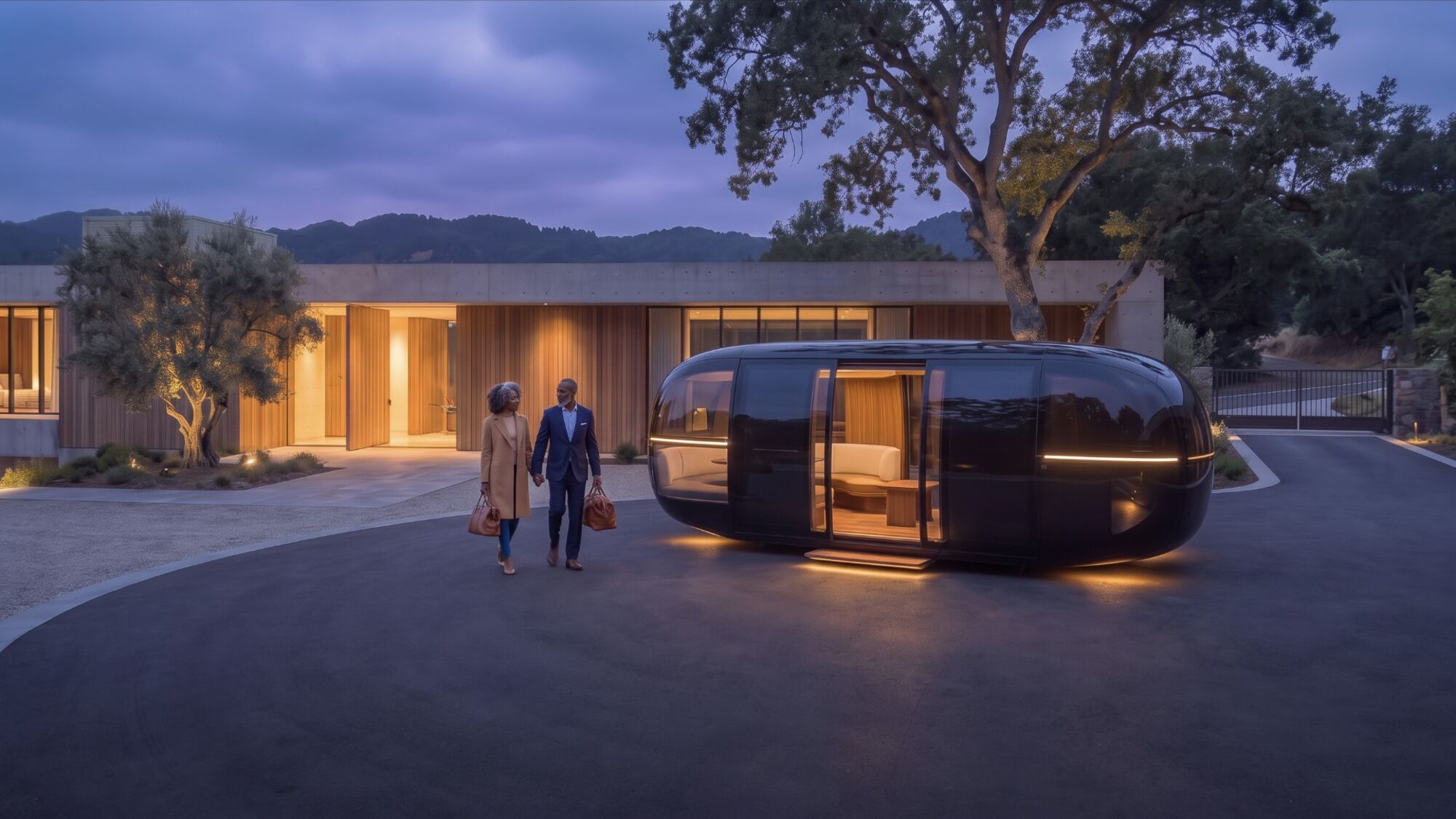
10:30 PM
Pacific HeightsYour suite is outside
The doors open toward your front step and the step lights up. Your bags are loaded, and the cabin is already set the way you like it: 68°F, your pillow, a nightcap poured.
 The Road Collection · A concept
A suite of your own, wherever the road leads. Designed for the autonomous age.
The doors open toward your front step and the step lights up. Your bags are loaded, and the cabin is already set the way you like it: 68°F, your pillow, a nightcap poured.
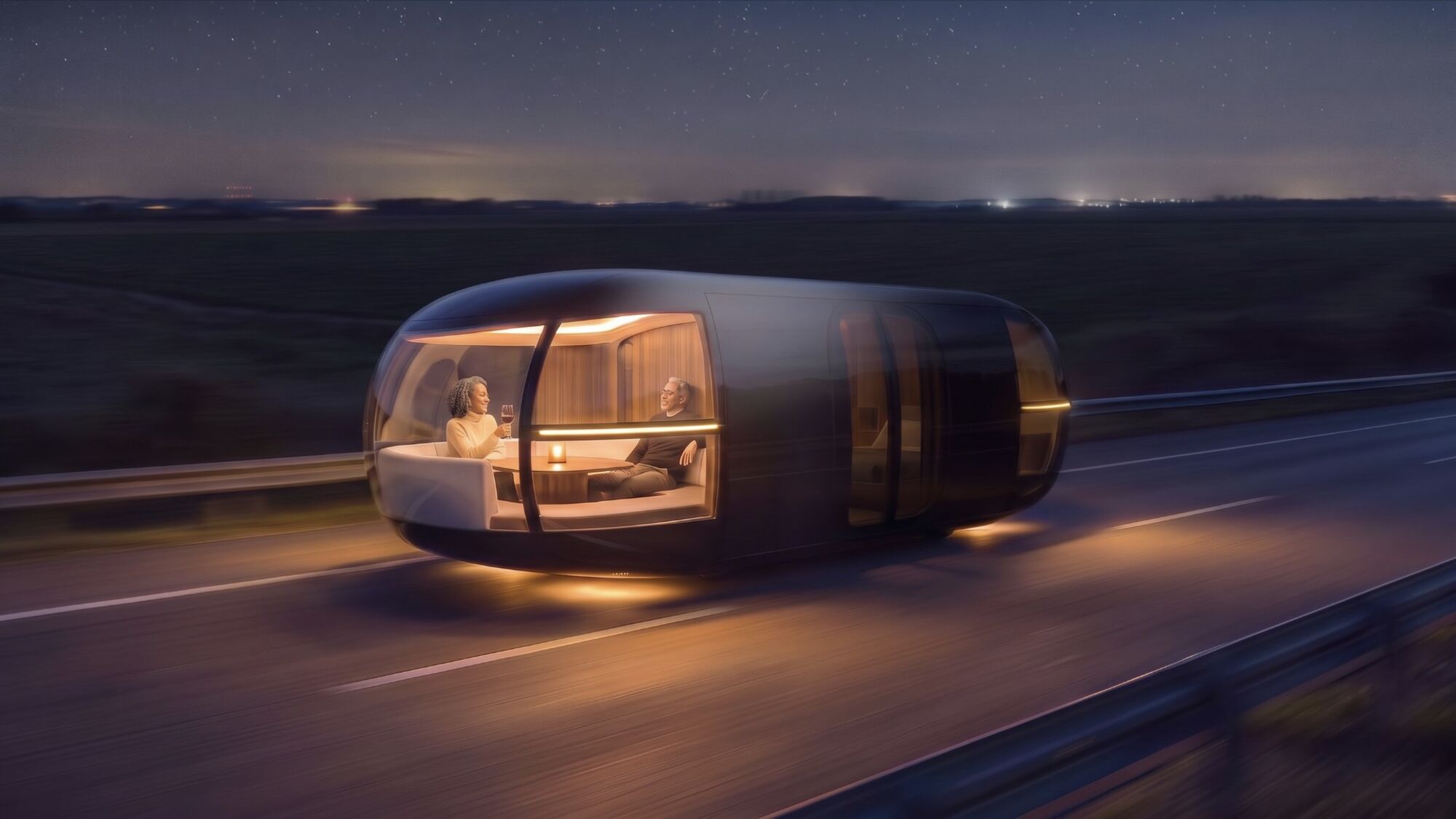
There is no driver, so the front of Nocturne belongs to you: a walnut table in a curved glass nose, a meal plated by the hotel kitchen, and the road unfolding ahead.
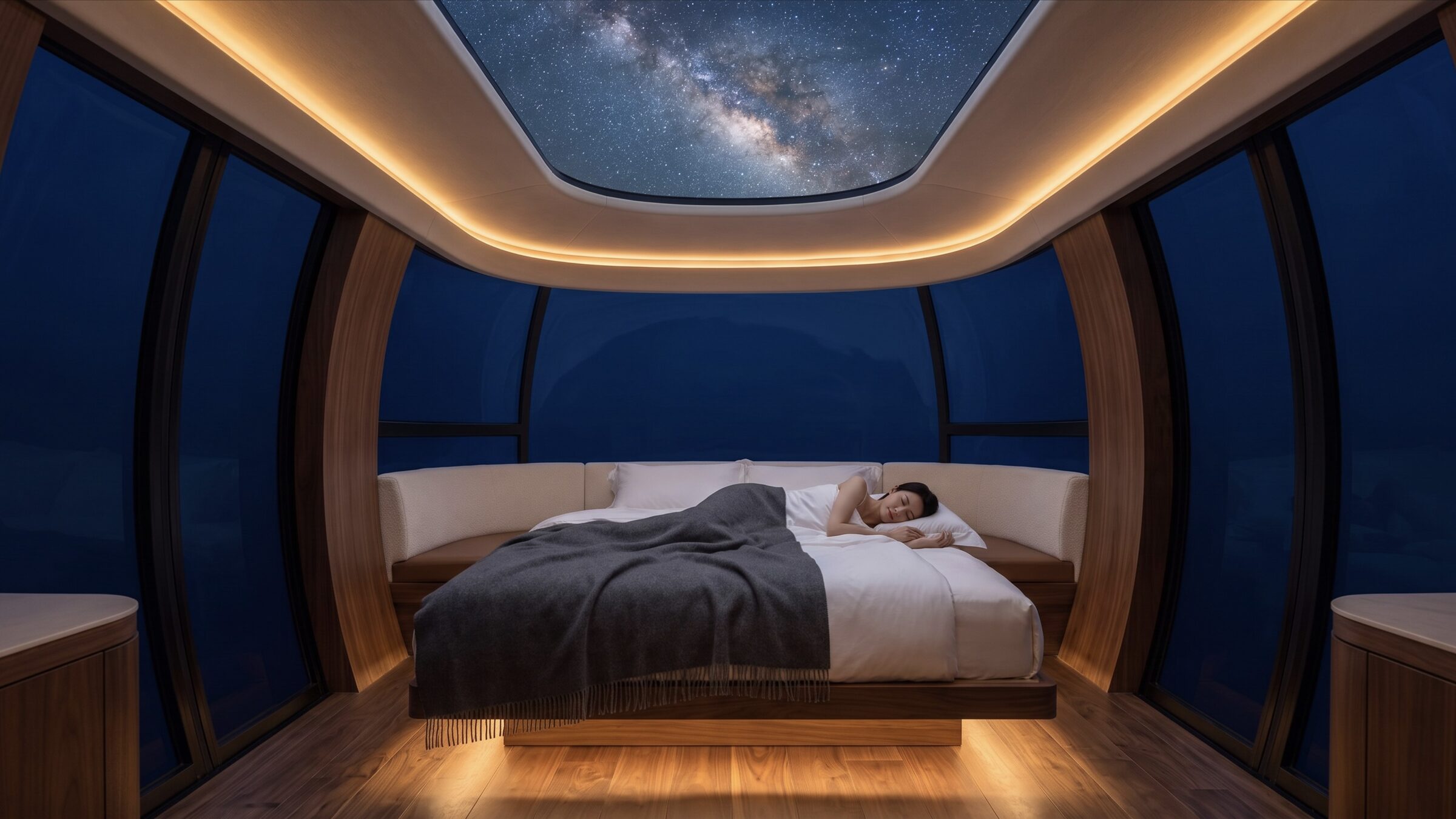
In Sleep Mode the side glass turns opaque while the roof stays perfectly clear. Nocturne holds a steady 55 mph in the right lane, and the ride is calm enough to sleep through.
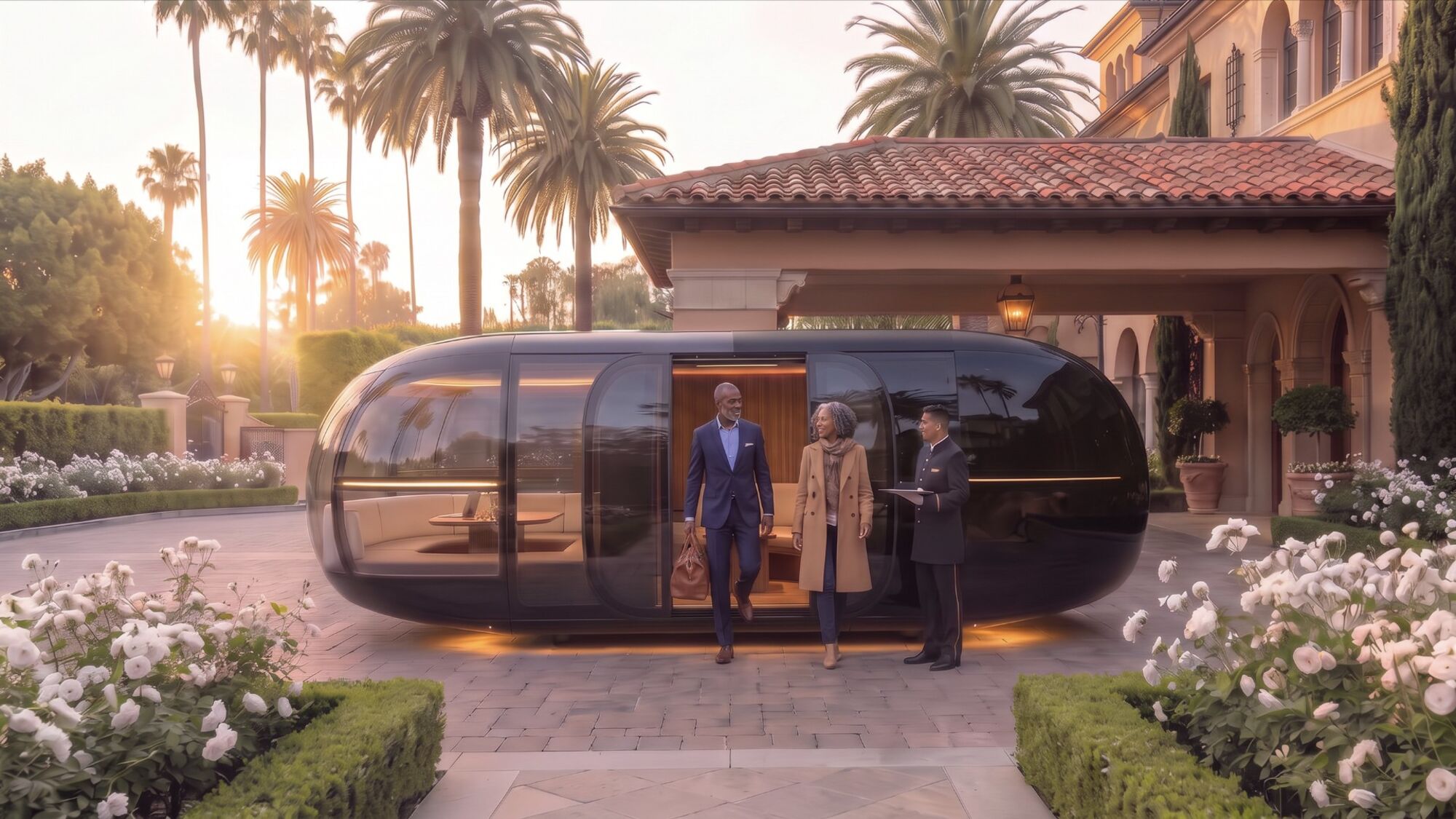
A sunrise alarm, a rain shower, an espresso. The doors open onto the forecourt of The Ritz-Carlton, Los Angeles, where someone is already holding your coffee.
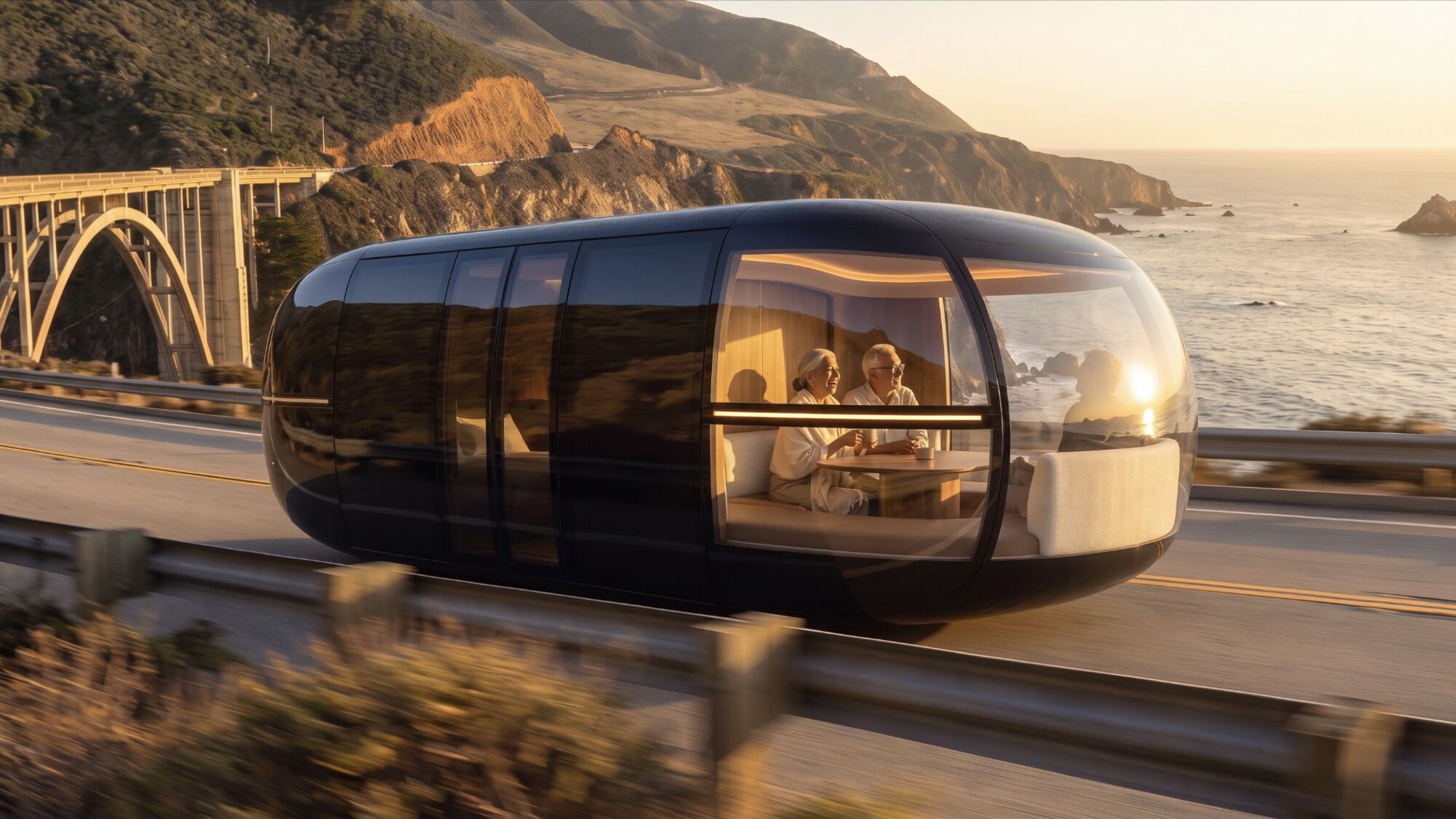
Take the long way.
The same seven metres of quiet becomes a bedroom, an office or a boardroom, so a single vehicle works through the night and through the day.
A queen bed under a clear glass roof, with blackout side glass and a travertine washroom behind it.
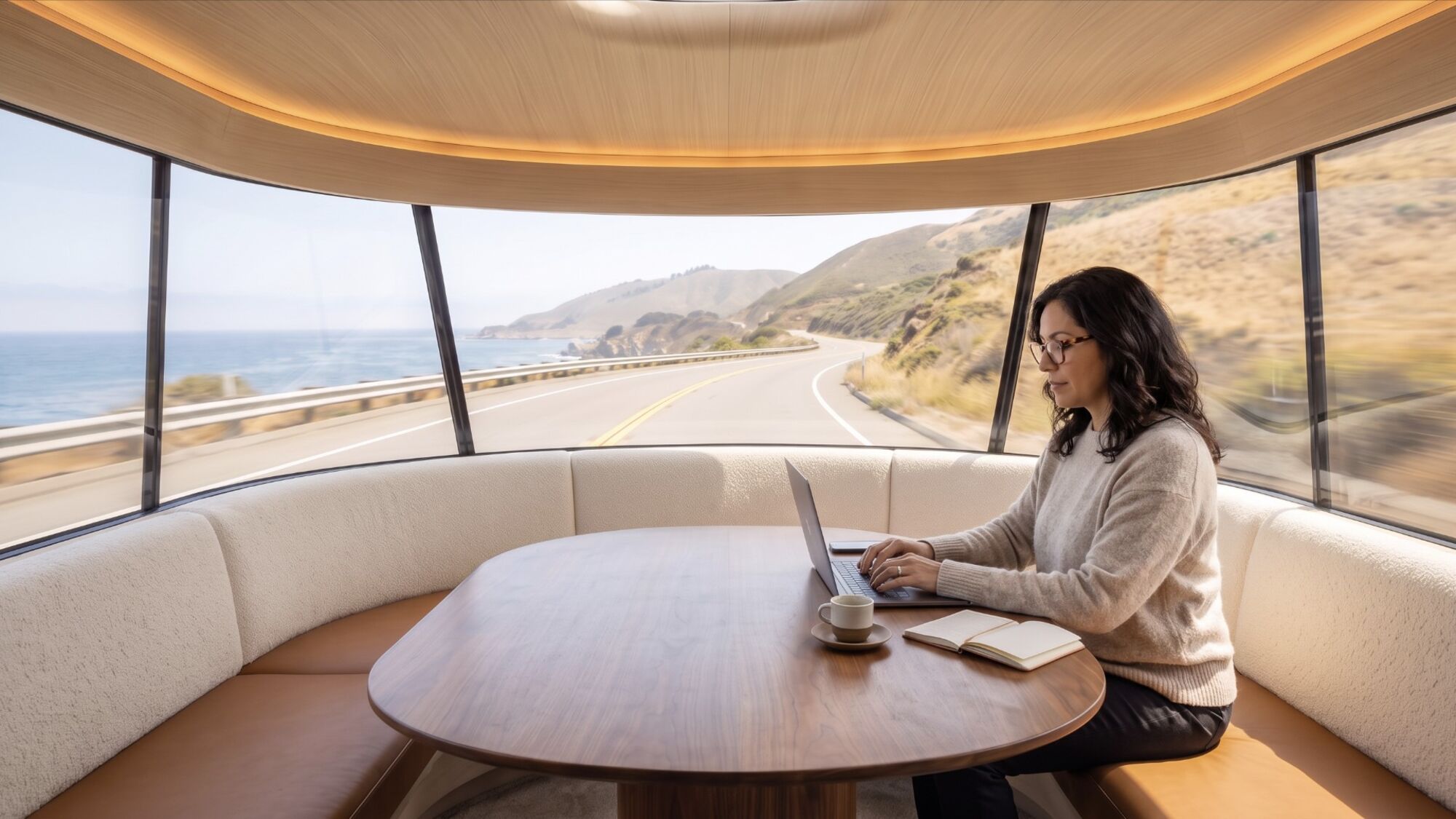
The front lounge becomes a private office with a view of the coast, a walnut desk, Starlink and bonded 5G.
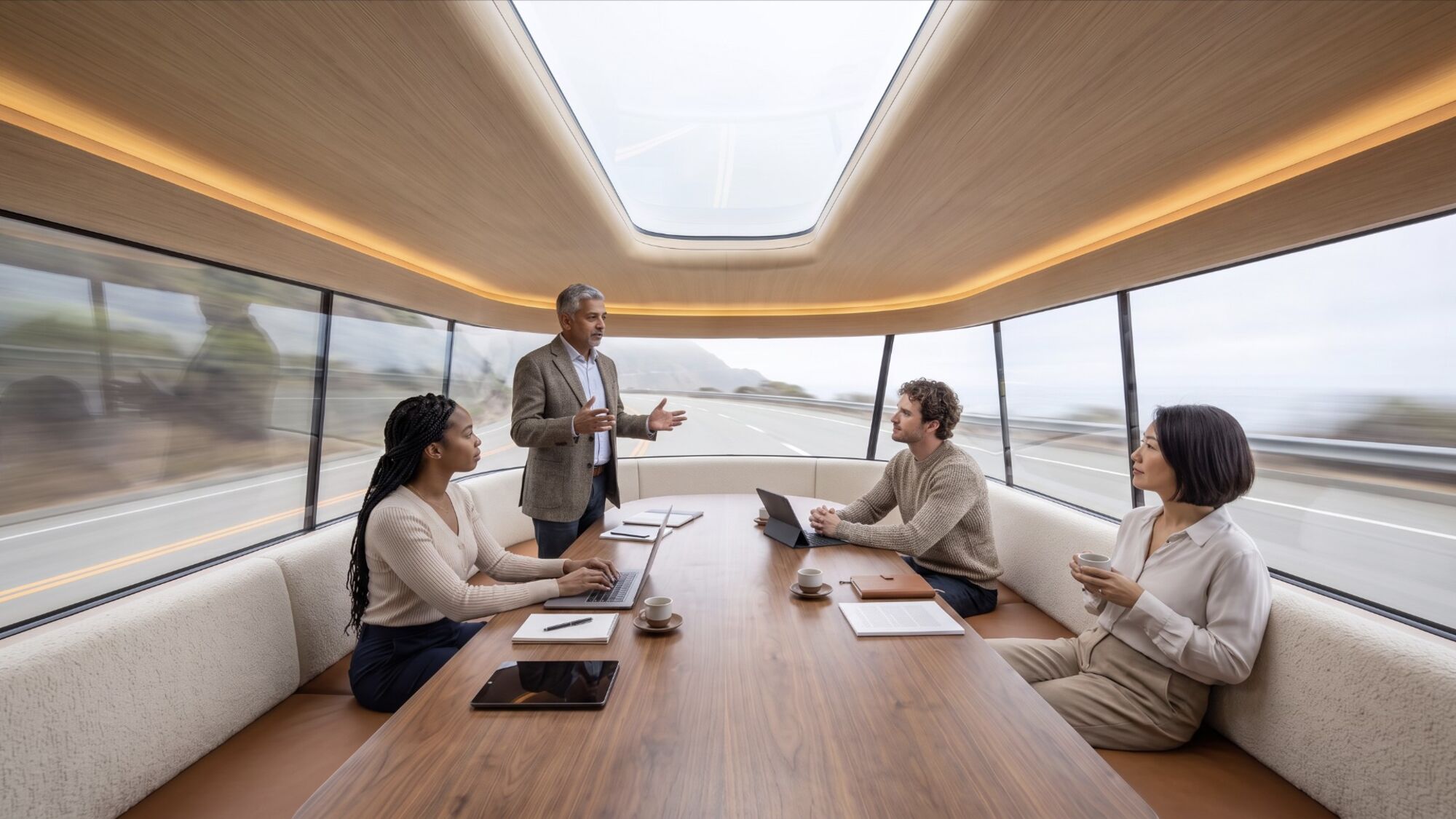
The bed stows away and the whole cabin becomes one long table. Meet on the way to the meeting.
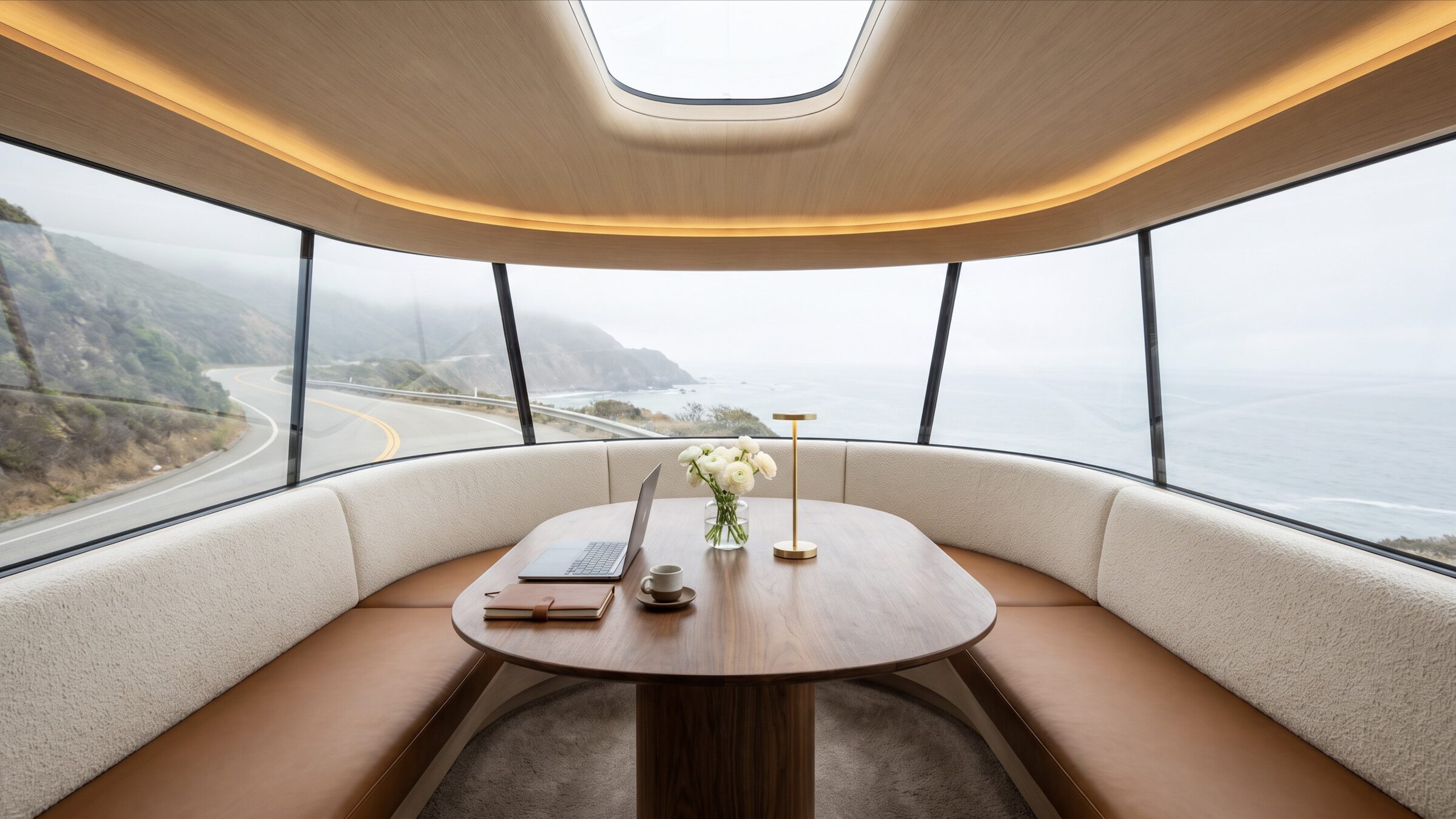
Cream bouclé, cognac leather and solid walnut, set inside 180 degrees of curved glass.
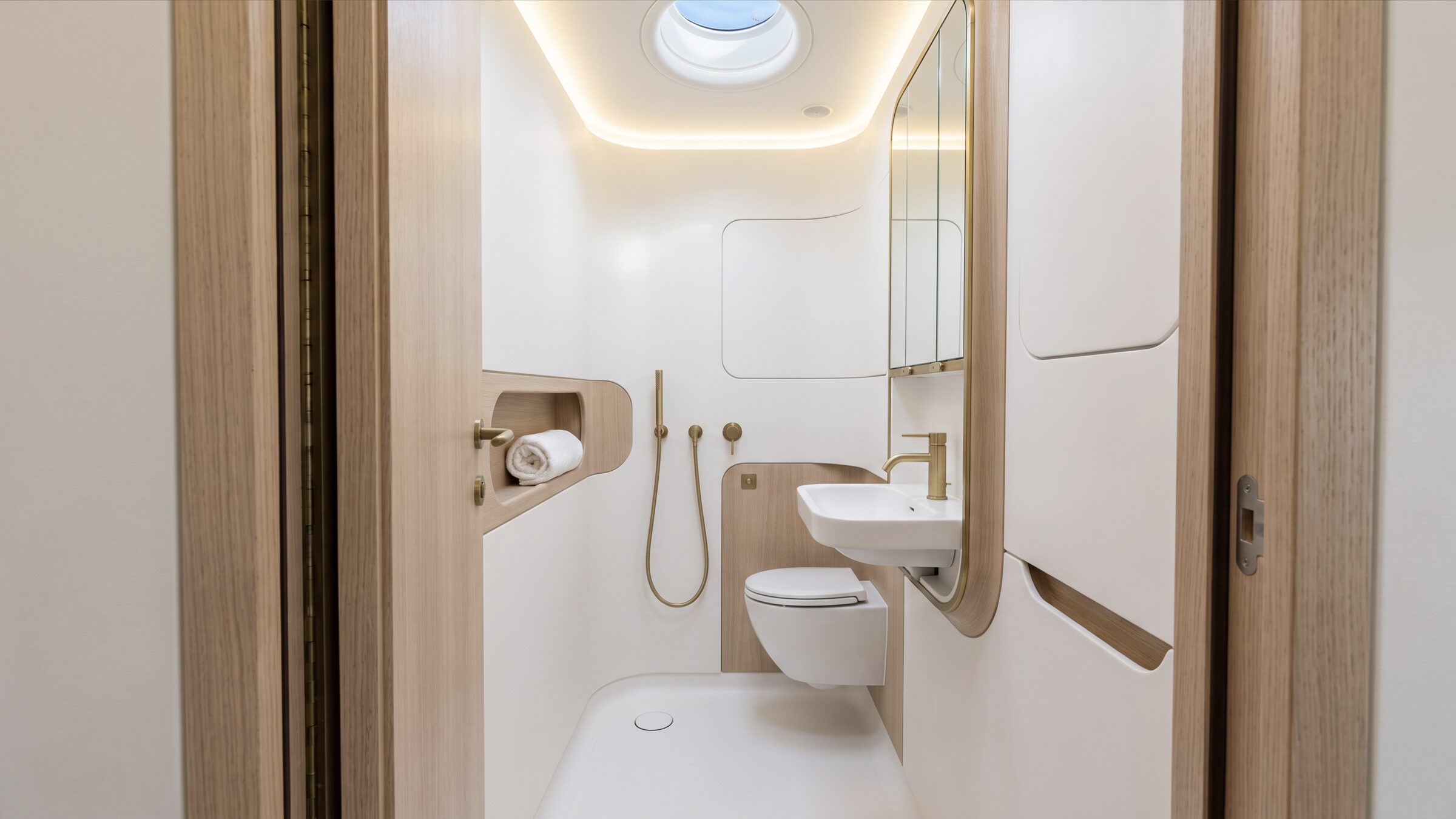
Honed travertine, a brass rain shower and a single oval skylight, tucked into the rear of the suite.
Plan the overnight, call your suite to the curb, and set the cabin for sleep, all within The Ritz-Carlton app.
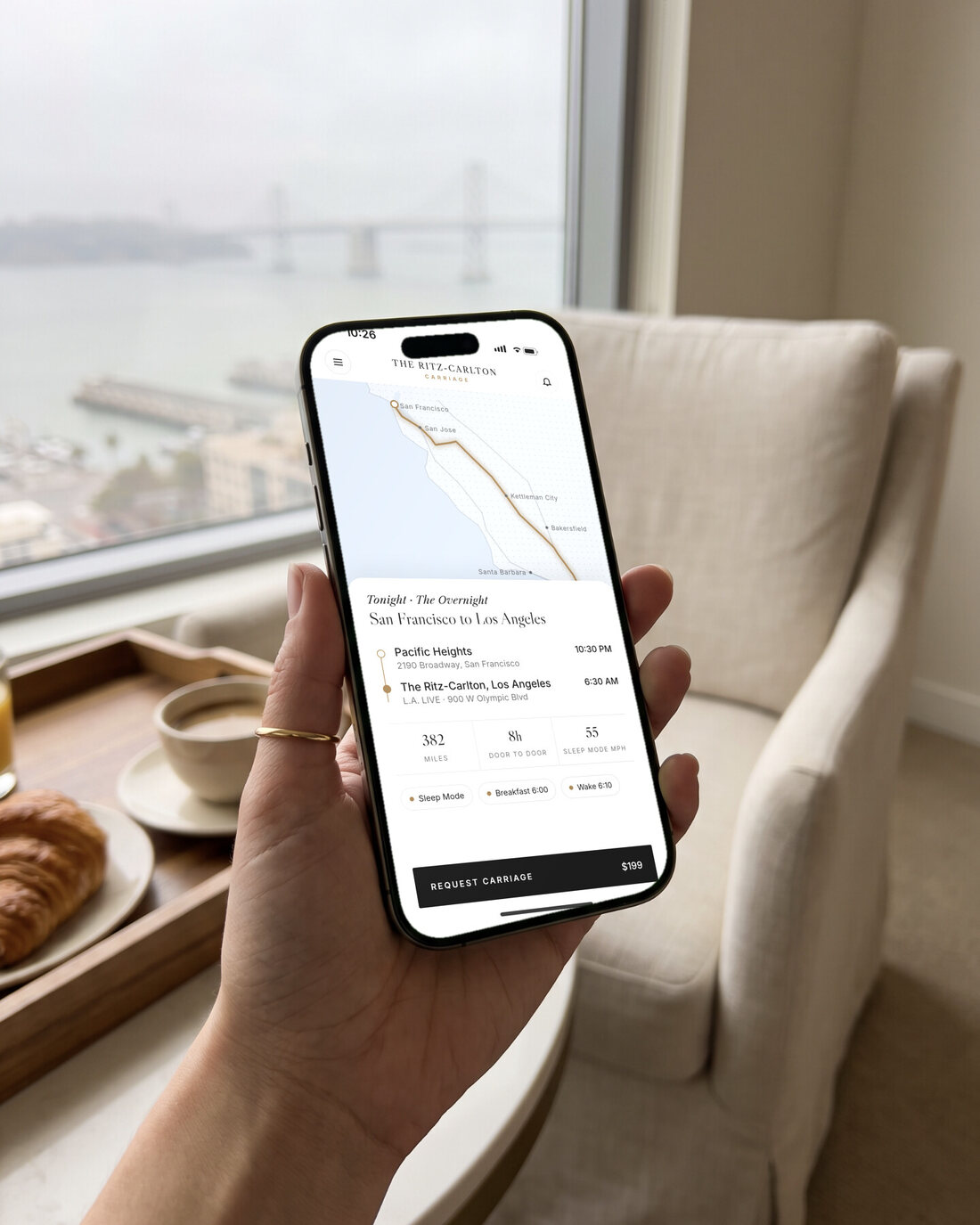
San Francisco to Los Angeles, mapped and priced in one tap. Depart at 10:30 PM, arrive at 6:30 AM.
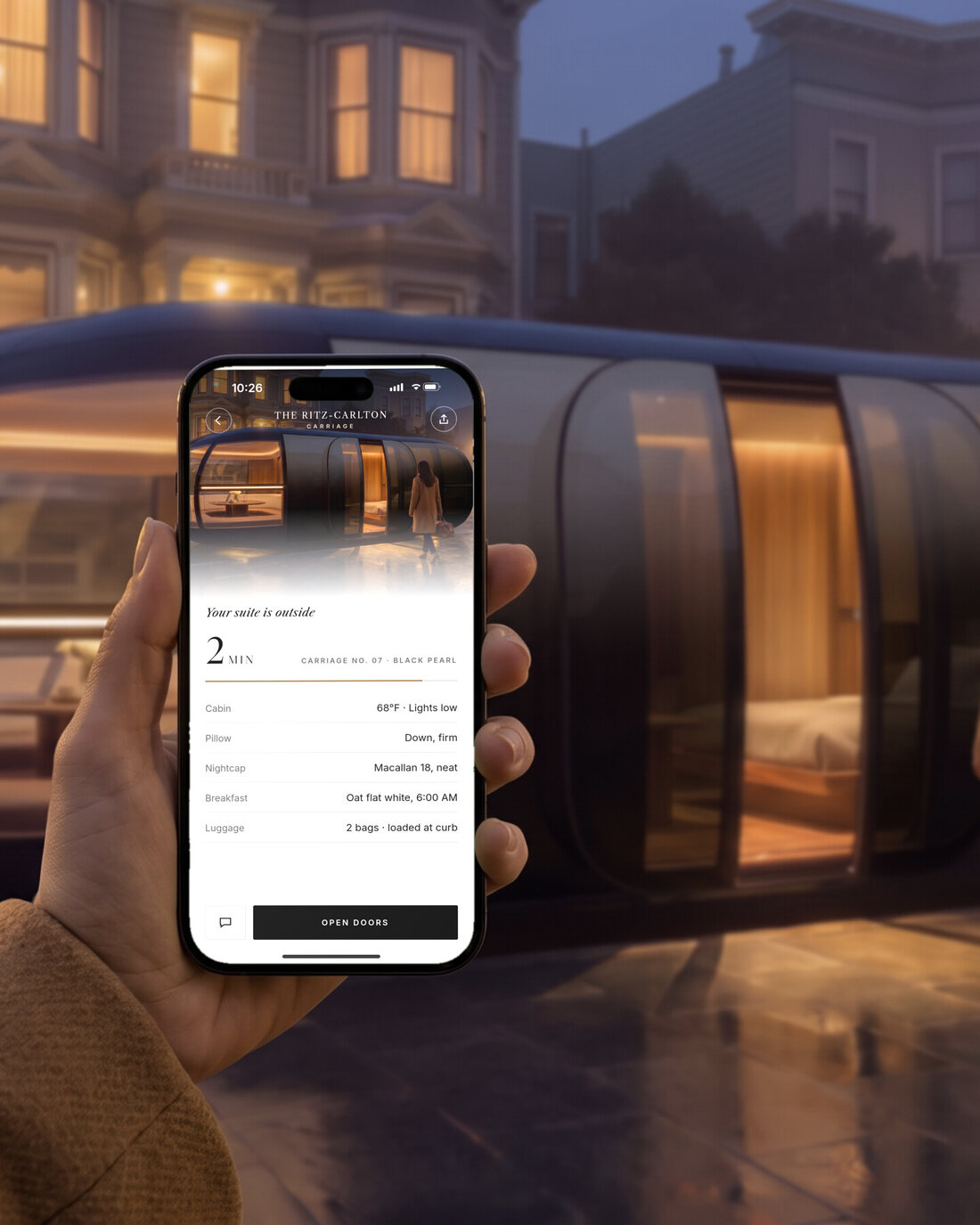
Watch your suite arrive, then open the doors from your phone. Your preferences are already set.
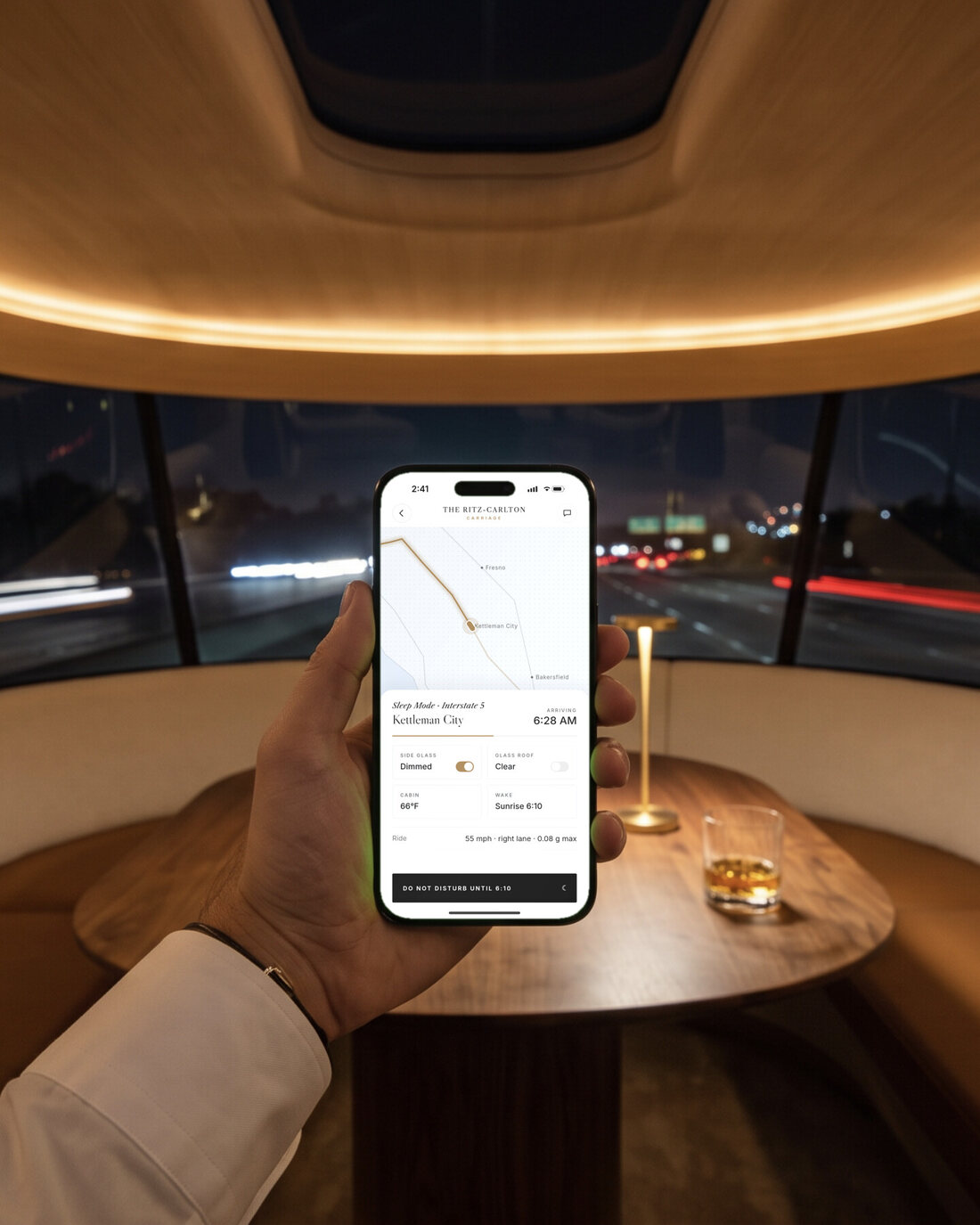
Follow the night along Interstate 5. Dim the glass, keep the roof clear, and wake at sunrise.
Autonomy is usually talked about as a feature. We find it more interesting as a design question: every part of a car that exists for the driver is a chance to make room for something else.
Without a dashboard or steering wheel to design around, the front of the vehicle can be its best room: a lounge inside 180 degrees of curved glass.
A vehicle that drives itself can travel equally well in both directions, so the body can be symmetrical, with doors that open in the middle, right where you step in.
With no engine bay, the battery can lie flat beneath the floor, keeping the ride low and calm and leaving the whole cabin for living space.
The hours you might have spent driving or waiting at an airport become yours again: to work, to sleep, or to be with the people beside you.
Nocturne carries a handful of guests, not forty, and with no driver its nose can be fully rounded. That leaves room under the floor for a megawatt-hour of battery.
Concept estimates for a 13-tonne autonomous coach, assuming battery packs reach about 260 Wh/kg by 2028. Level 4 autonomy on approved highway corridors, with 24/7 operations and concierge oversight.
The Ritz-Carlton already has ten properties between Portland and Phoenix. Give each one a megawatt charger in the forecourt, and the hotels become the network.
10 properties, each a charging stopYour door
We are gauging interest in a first West Coast corridor between San Francisco and Los Angeles. Tell us you would ride, and where you would go first.